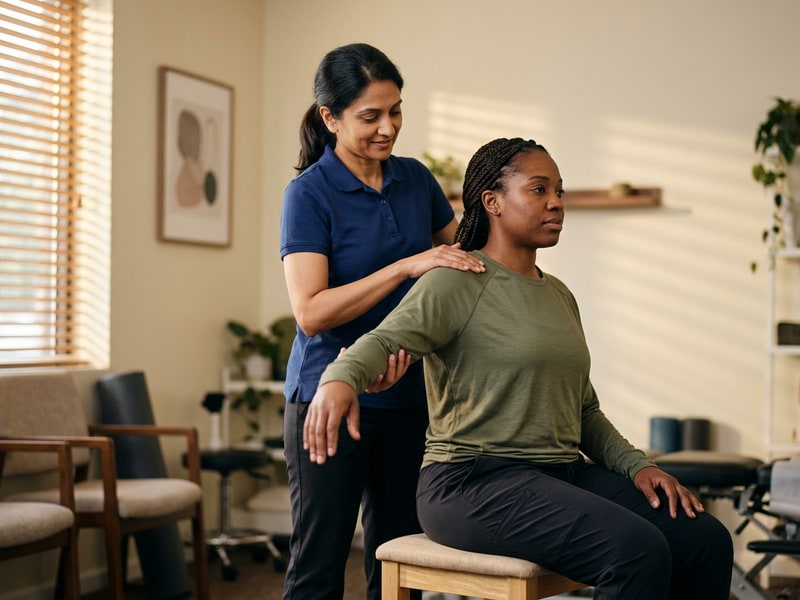
6 common questions about auto accident injuries at Valley Chiropractic.
A car crash on Highway 99, Airport Way, or the I-205 interchange can leave you sore, stiff, and unsure what to do next. Even a low-speed fender bender can cause whiplash, headaches, and back pain that show up hours or days later. As a chiropractor who treats crash injuries every week at our Manteca office, I hear the same auto accident chiropractor questions again and again: When should I get checked? Who pays for care? Do I need an attorney?
Below are straight answers about California claims, treatment timelines, documentation, and recovery. This is general education, not legal or medical advice for your specific case. For that, call our office or visit our auto accident injury page.
How soon after a car accident should I see a chiropractor?
See a chiropractor within 72 hours of the crash, even if you feel okay. Adrenaline and stress hormones mask pain in the first day or two, and soft tissue swelling often peaks between 24 and 72 hours after impact. Getting evaluated early creates a medical record tied to the date of loss, which matters for both your recovery and any California insurance claim.
At the first visit, we screen for red flags like concussion signs, numbness, weakness, and severe neck pain that would send you to the ER instead. If those are cleared, we check range of motion, palpate the spine, and look at how you move. Common findings after a rear-end collision include cervical sprain and strain, restricted joint motion, muscle guarding, and early [whiplash-associated disorder](/services/whiplash-treatment).
Delaying care by weeks is one of the biggest mistakes I see. Insurance adjusters often argue that a gap in treatment means the injury was not serious or was caused by something else. More importantly, untreated whiplash can turn into chronic neck pain and headaches. A review by the Bone and Joint Decade [Neck Pain Task Force](https://pubmed.ncbi.nlm.nih.gov/18204405/) found that about half of people with whiplash still report neck pain a year after the injury, and that greater early pain and disability predicted slower recovery.
We wrote a detailed walkthrough of what to do in [the first 72 hours after a Manteca auto accident](/blog/auto-accident-chiropractor-manteca-first-72-hours). If you were in a crash today or yesterday, call the office and ask for a same-day or next-day accident evaluation. Bring the police report number, the other driver's insurance info, and a photo ID. If you already saw the ER, bring those discharge papers too so we can build on the imaging and exam they already did.
What injuries do chiropractors treat after a car crash?
Chiropractors treat the musculoskeletal injuries that make up the majority of crash cases: whiplash, neck and back sprains, headaches, mid-back and rib pain, shoulder strains, and irritated or [pinched nerves](/services/pinched-nerves). We also co-manage disc injuries and sciatica when the exam and imaging support it.
Whiplash is the most common. When your car is struck, your head snaps back and forward faster than your neck muscles can brace, stretching ligaments and joint capsules in the cervical spine. That produces neck stiffness, headaches at the base of the skull, jaw pain, dizziness, and sometimes arm tingling. The [American Chiropractic Association](https://www.acatoday.org/) recognizes spinal manipulation, mobilization, and rehabilitative exercise as standard conservative care for these injuries.
Lower back pain is the second most common complaint after a crash, especially in drivers who were braced against the pedals at impact. We often see sacroiliac joint irritation, lumbar facet sprain, and aggravation of pre-existing [disc conditions](/services/disc-conditions). Shoulder and chest wall pain from the seatbelt is also common and responds well to soft tissue work and [extremity care](/services/extremity-care).
Head injuries need a different approach. If you had loss of consciousness, vomiting, confusion, or memory gaps, that is an ER visit, not a chiropractic visit. Once a concussion is medically cleared, we can help with the cervicogenic headaches and neck stiffness that often linger. Same rule applies to fractures, internal injuries, and severe neurologic loss like a foot that will not lift. Those go to the hospital first.
Our crash treatment usually blends gentle adjustments, [massage therapy](/services/massage-therapy), targeted stretching, and home exercises. The mix depends on your age, the severity of impact, and how your body is responding week to week. Older patients and pregnant patients get modified techniques.
Who pays for chiropractic care after a California auto accident?
In California, several payment sources may apply, and the right one depends on your policy and who was at fault. The most common are MedPay from your own auto policy, the at-fault driver's bodily injury coverage paid at settlement, your health insurance, or a lien arrangement if you have an attorney. Every case is different, so we go through the options with you at the first visit.
MedPay is optional coverage on your California auto policy that pays medical bills regardless of fault, usually up to a set limit. If you have it, it often pays first and does not require you to wait for a settlement. If the other driver was at fault, their liability insurance is supposed to cover reasonable medical care, but that money is typically not paid until your case settles, which can take months.
Health insurance can also cover crash-related care. Coverage rules vary widely by plan, and some plans require reimbursement out of any settlement you receive. We have a general overview in our [California chiropractic insurance guide](/blog/chiropractic-insurance-coverage-california-2026-guide) and more detail on [personal injury liens and attorney cases](/faq/personal-injury-chiropractic-faqs-liens-attorneys-and-documentation).
California is a fault-based auto state, meaning the driver who caused the crash is financially responsible. Minimum liability limits are set by state law and were increased under Senate Bill 1107, which raised bodily injury minimums effective January 1, 2025 per the [California Department of Insurance](https://www.insurance.ca.gov/). Those minimums are often not enough for a serious injury, which is why uninsured and underinsured motorist coverage matters.
Our office does not quote treatment prices in a general FAQ because your fees depend on the visit type, the services performed, and how your claim is being handled. Call any of our locations, including [Manteca](/locations/manteca), and our front desk will walk through what applies to your situation.
Do I need a lawyer to get chiropractic care after an accident?
No, you do not need a lawyer to get treatment. You can see a chiropractor right away using MedPay, your health insurance, or by paying out of pocket. Many of our Manteca patients start care within days of the crash and only decide later whether to involve an attorney.
That said, an attorney is often worth considering in specific situations: the other driver disputes fault, there are serious or lasting injuries, the insurance company is lowballing or delaying, there is a commercial vehicle involved, or you were hurt as a pedestrian or cyclist. Personal injury attorneys in California typically work on contingency, meaning they take a percentage of the settlement rather than an hourly fee. If your case is small and clear-cut, you may not need one at all.
When an attorney is involved, treatment is sometimes handled on a lien. That means the provider agrees to wait for payment until the case settles, and the bill is paid from the settlement. We work with liens in appropriate cases, but the decision belongs to you and your attorney. Our [personal injury service page](/services/personal-injury) explains how we document care for these claims, and our [FAQ on liens and attorney cases](/faq/personal-injury-chiropractic-faqs-liens-attorneys-and-documentation) goes deeper.
Whether or not you hire counsel, documentation matters. We keep detailed notes on your exam findings, diagnoses, treatment plan, and objective progress markers like range of motion measurements. That record supports both your recovery and any claim you file. The [California Department of Insurance auto page](https://www.insurance.ca.gov/01-consumers/105-type/95-guides/01-auto/) has consumer information about the claims process and your rights when dealing with adjusters.
A practical tip: do not give a recorded statement to the other driver's insurance company before you understand your injuries. What feels like a minor sore neck on day two can be a diagnosed cervical sprain by week three.
How long does recovery from a car accident injury usually take?
Most people with soft tissue crash injuries feel meaningfully better within 6 to 12 weeks of starting care, though the exact timeline depends on age, health, crash severity, and whether you had prior neck or back issues. Mild whiplash often clears in a few weeks. Moderate cases with headaches, radiating pain, or sleep disruption may take 3 months of consistent treatment. Severe cases and those with disc involvement can take longer and sometimes need co-management with an orthopedist or spine specialist.
A rough pattern I see in the Manteca and Mountain House commuter population, who spend a lot of time on I-205 and I-5, looks like this. Weeks 1 and 2 focus on calming inflammation, restoring gentle range of motion, and sleeping through the night. Weeks 3 to 6 focus on progressive adjustments, soft tissue work, and starting rehab exercises. Weeks 7 to 12 focus on rebuilding strength, endurance, and posture so the injury does not become chronic. This was a broad literature review with mixed study designs and populations, so results vary. It is an association from pooled data, not a guarantee of your outcome.
Red flags that slow recovery include delaying the first visit, missing appointments, returning to heavy work too soon, poor sleep, and untreated pre-existing conditions. Green flags include starting care within a week, doing home exercises, staying active within tolerance, and communicating honestly about what is and is not improving. If progress stalls at any point, we reassess, adjust the plan, and refer out when the exam suggests you need imaging or a specialist opinion.
What if I feel fine right after the crash but sore days later?
That is extremely common and worth getting checked out. Delayed symptoms after a car accident are the rule, not the exception. Adrenaline and endorphins suppress pain at the scene, and soft tissue inflammation builds gradually over 24 to 72 hours as the body reacts to torn or stretched fibers. Many patients tell me they walked away from the crash, drove home, went to bed, and woke up the next morning barely able to turn their head.
Symptoms that commonly show up 1 to 7 days later include neck stiffness, headaches that start at the base of the skull, upper back tightness between the shoulder blades, low back pain when standing up from sitting, jaw soreness, dizziness, and tingling or numbness down an arm. Some people also notice trouble concentrating or sleeping. These are typical signs of whiplash-associated disorder and cervical sprain and strain.
Do not wait for the pain to get worse before calling. Insurance adjusters look at the gap between the crash date and the first treatment date, and a long gap can hurt your claim. More importantly, treating an acute soft tissue injury in week one is easier than treating a chronic one at month six. The [CDC's motor vehicle injury resources](https://www.cdc.gov/transportation-safety/about/index.html) note that motor vehicle crashes are a leading cause of death in the United States and led to more than 2.8 million emergency department visits for injuries in 2023.
Call our [Manteca](/locations/manteca) or [Ripon](/locations/ripon) office and ask for an accident evaluation. We will do a full exam, document findings tied to the crash date, and start care that fits what we find. If red flags come up during the exam, like signs of concussion, fracture, or nerve damage, we refer you to the appropriate provider first and pick up care once you are cleared. Our [head and neck pain page](/pain/head-neck) has more on the specific symptom patterns we look for.