Sports Injuries
Sports Injury Chiropractic Ripon: Common Questions Answered
By Dr. Tim Coykendall, D.C. · August 24, 2026 · Updated August 24, 2026
Sports injury chiropractic in Ripon focuses on getting athletes back to sport by treating the joints, muscles, and nerves that get strained during training and competition. Yes, chiropractors can help with many sports injuries like sprains, strains, and joint restrictions, and care often works best alongside strength work and smart rest. In this post I answer the questions Ripon patients ask me most about sports care.
Can chiropractors help with sports injuries?
Short answer: yes, for many of them. The joints, muscles, and nerves take a beating in sports like football at Ripon High, softball tournaments at Mistlin Sports Park, and long training rides down River Road. When a joint gets stiff or a muscle guards after a hit, movement patterns change. That is when a small tweak turns into a bigger problem.
Research from the American Chiropractic Association and peer-reviewed spine journals supports chiropractic care for acute and chronic low back pain, neck pain, and certain extremity issues that show up in athletes. A 2017 review in JAMA found spinal manipulation produced modest improvements in pain and function for acute low back pain compared with other active treatments. That does not mean an adjustment fixes every injury. It means it is one useful tool.
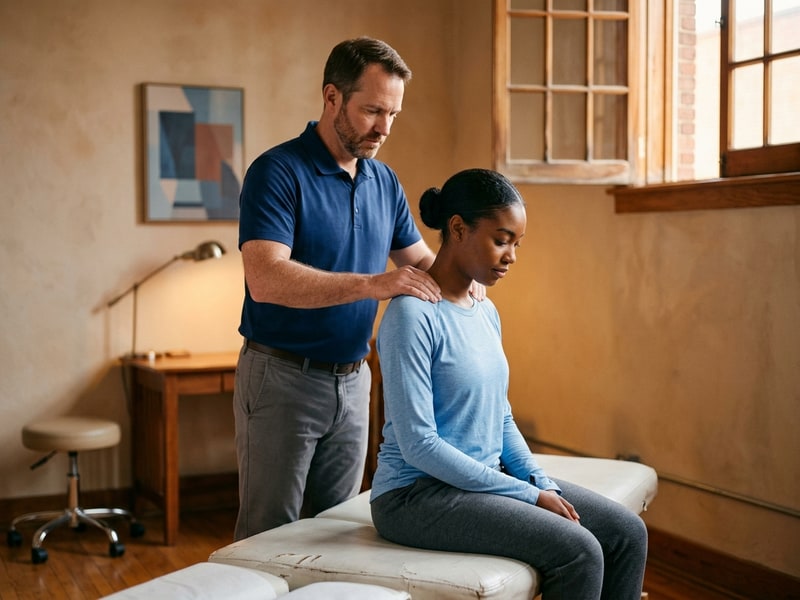
In my office I use hands-on adjustments, soft tissue work, and rehab drills. For a rolled ankle or a sore shoulder from throwing, I look at the joint above and below too. A stiff mid-back can make a shoulder cranky. A locked-up hip can make a hamstring keep pulling. If you want more detail on what we treat, our sports injury page and extremity care page walk through common cases.
What is the difference between a sports chiropractor and a regular chiropractor?
Every licensed chiropractor in California completes a doctoral program and passes national and state boards. A sports chiropractor has added training in athletic injury, rehab, and on-field care. Some hold a CCSP (Certified Chiropractic Sports Physician) or DACBSP credential through the American Chiropractic Board of Sports Physicians. Others build sports expertise through years of treating athletes.
A general chiropractor is fully qualified to treat back and neck pain, headaches, and joint problems. A sports-focused chiropractor tends to spend more time on movement testing, sport-specific loading, and return-to-play decisions. For a weekend softball player with a stiff neck, either can help. For a high school pitcher with elbow pain during the season, the sports background matters more.
At Valley Chiropractic our doctors treat athletes at every level, from Little League through masters cycling. You can read about our team on the doctors page and see the techniques we use. If you are not sure who to book with, call the Ripon office and we will match you with the right doctor.
Is sports chiropractic covered by insurance?
Most major medical plans in California cover chiropractic care, including care for sports injuries, but the details depend on your plan. Some plans require a referral. Some limit the number of visits per year. Some apply a deductible before coverage kicks in. HMO, PPO, Medicare, and workers comp all handle chiropractic differently.
I cannot quote what your visit will cost in a blog post because it depends on your plan, your deductible, and what we do that day. Our front desk verifies benefits before your first visit and will tell you what to expect. Call the office or check our insurance FAQ and our 2026 California coverage guide for a plain-English overview.
A few things to know. If your injury happened at work, workers comp usually covers care. If it happened in a car accident on I-5 or Highway 99, personal injury or auto medical pay may apply. If you have a health savings account, chiropractic is a qualified expense. Bring your insurance card and ID to your first visit and we will handle the rest.
When should you not get adjusted by a chiropractor?
Adjustments are safe for most people, but not for every situation. I turn patients away or refer out when the signs point to something an adjustment will not fix, or could make worse.
Red flags that mean we pause and get imaging or a medical opinion first:
- Severe trauma with suspected fracture or dislocation
- Sudden loss of bladder or bowel control, or saddle numbness (possible cauda equina)
- Progressive weakness in an arm or leg that is getting worse fast
- Signs of stroke like sudden severe headache, slurred speech, or facial droop
- Active infection, cancer in the spine, or severe untreated osteoporosis
- Recent spine surgery without clearance from the surgeon
According to the NCCIH, serious complications from spinal manipulation are rare, but proper screening is important. I take a full history and do an exam on every new patient. If something does not add up, I refer to your primary care doctor, an orthopedist, or the ER. Our chiropractic emergencies FAQ has more on this.
Minor soreness the day after an adjustment is normal. Sharp new pain, numbness, or weakness is not. Call the office if anything feels off.
What does sports injury care look like in our Ripon office?
Ripon is a small town with a big sports culture. Between the almond orchards and the daily commute up 99 to Modesto or Stockton, our patients push their bodies. A typical first visit runs about 45 to 60 minutes. I take a history, do orthopedic and neurologic tests, and check how you move. If you brought imaging, I review it. If we need imaging, I order it or refer you out.
Care usually blends a few pieces. Adjustments restore joint motion. Soft tissue work like instrument-assisted release or manual therapy calms tight muscles. Corrective exercises rebuild strength and control. For an ankle sprain from a soccer match at Ripon High, that might mean joint mobilization, calf and peroneal work, and single-leg balance drills. For a lifter with a cranky low back, we look at the lower back, hips, and thoracic spine together.
Return-to-play is a decision, not a date. I want you back, but not before the tissue is ready. We reassess at each visit and progress your program. If you are a high school athlete, our back-to-school readiness post covers preseason prep. For adults, the chiropractic care page walks through what to expect.
When to see a chiropractor and when to see someone else
Not every ache needs a chiropractor. Not every ache needs the ER either. Here is how I think about it.
See a chiropractor first for: joint stiffness, muscle strain, mechanical back or neck pain, tension headaches, mild to moderate sciatica, and general soreness after training. See your primary care doctor for: suspected concussion, fever with joint pain, or systemic symptoms. Go to the ER for: obvious fracture, severe head or neck trauma, sudden loss of function, or the red flags in the last section.
Physical therapists and chiropractors overlap a lot. If you want a comparison, our chiropractor vs PT FAQ breaks it down. For sports injuries I often work with local PTs and orthopedists. Team care beats solo care when things are complicated. If you need surgery or a surgical opinion, that decision belongs with you and a spine or orthopedic specialist. Surgery is typically reserved for cases that do not improve with conservative care or that involve progressive nerve loss, and that call belongs with the specialist, not with me.
If you are in Ripon, Manteca, Salida, or Escalon and have a nagging sports issue, book a visit. We will figure out together whether adjustments are the right first move.