
Pain Management
Neck Pain Mountain House: Questions Answered by a Local Chiropractor
By Dr. Dalvir Atwal, D.C. · July 27, 2026 · Updated July 27, 2026
If you are dealing with neck pain in Mountain House and wondering whether a chiropractor can help, the short answer is yes for most common cases. Research shows spinal manipulation and mobilization are effective options for mechanical neck pain, and a licensed chiropractor can also screen for red flags that need urgent care. I am Dr. Dalvir Atwal, and below I answer the questions I hear most often from patients across Mountain House, Tracy, Manteca, and Ripon.
Can chiropractors really help neck pain?
Yes, and this is backed by strong evidence. A large review by Bronfort and colleagues, funded in part by the UK General Chiropractic Council, found that spinal manipulation and mobilization are effective for acute and chronic mechanical neck pain. The National Center for Complementary and Integrative Health also lists chiropractic care as a reasonable option for neck pain based on clinical trials.
In plain English, that means when your neck hurts because of tight muscles, joint stiffness, poor posture, or an old strain, adjustments and soft tissue work usually help. The care we provide in our office is not just cracking. It also includes stretches, home exercises, ergonomic advice, and sometimes massage therapy to release tight muscles around the shoulders and upper back.
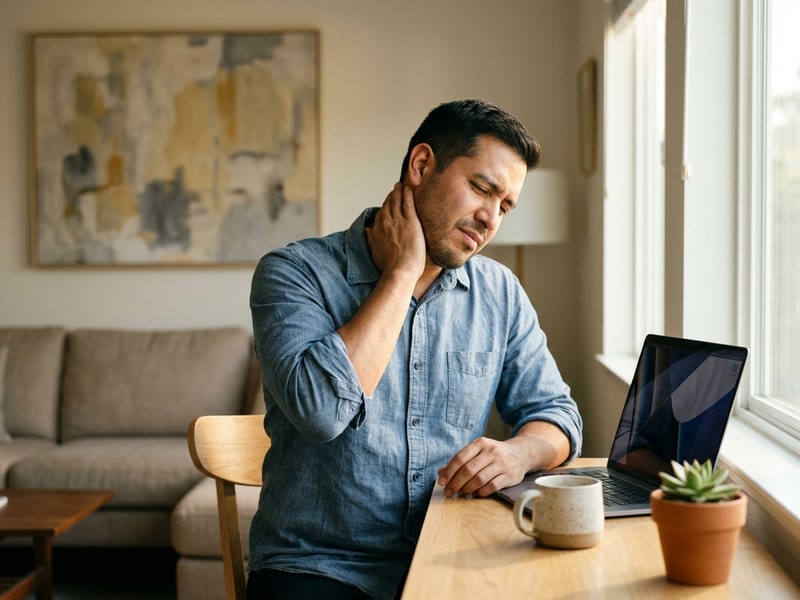
Most patients I see in Mountain House fall into a few groups. Commuters who drive to the Bay Area every morning and hold the wheel with tight shoulders. Remote workers hunched over laptops on the kitchen counter. Parents lifting kids in and out of car seats. All of these place repeated stress on the cervical spine. A treatment plan that combines chiropractic care with better daily habits usually brings real relief within a few weeks. If your neck pain started after a crash, that falls under whiplash treatment and often needs a different approach.
How to tell if your neck needs an adjustment
There is no single test you can run at home, but there are common signs that point to a joint or muscle problem in the neck. I ask patients about these during the first visit:
- Stiffness when you turn your head to check a blind spot on I-205 or the 580.
- A dull ache at the base of the skull, especially by the end of the workday.
- Clicking or grinding sounds when you rotate your neck.
- Headaches that start at the back of the head and wrap forward.
- Tightness across the tops of the shoulders that returns no matter how much you stretch.
- Trouble sleeping on one side because of neck soreness.
If you nod along to two or three of these, your neck likely has restricted joint motion, tight muscles, or both. An exam helps confirm what is going on. During your visit I check range of motion, palpate the joints one by one, and test the nerves in the arms. If the pain is mostly muscular, massage and mobilization may be enough. If specific spinal joints are locked up, a gentle adjustment often restores motion quickly. You can read more about what to expect in our post on your first chiropractic visit.
Can chiropractic adjustments hurt your neck?
This is the question I hear most from new patients, and it is a fair one. The honest answer is that serious harm from a neck adjustment is rare, and mild soreness for a day or two is common. A 2016 systematic review by Gouveia and colleagues in the journal Spine looked at adverse events and found most were minor and self-limiting, such as temporary stiffness or headache.
There has been discussion in the media about stroke risk from neck manipulation. The best available research, including a study by Cassidy and colleagues published in Spine, found no increased risk of vertebrobasilar stroke after a chiropractic visit compared to a primary care visit. In other words, people who were already having early stroke symptoms sometimes visited either provider looking for relief, but the manipulation itself did not cause the event.
As a chiropractor, my job is to screen every patient before I lay hands on their neck. I take a full history, check blood pressure when indicated, and use orthopedic and neurologic tests. If something does not look right, I refer out. Patients also have options. Not every neck problem requires a rotational adjustment. I use several techniques, including instrument-assisted methods and gentle mobilization, that work well for people who prefer a lighter touch. If you have concerns, tell me. We adjust the plan.
What is a red flag for neck pain?
Red flags are signs that your neck pain may be caused by something more serious than a strain or joint problem. These need medical evaluation, not just chiropractic care. Based on guidance from the American Chiropractic Association and standard medical training, watch for:
- Neck pain after a significant trauma such as a fall or car crash, especially with numbness.
- Fever, unexplained weight loss, or night sweats along with neck pain.
- Severe headache described as the worst of your life.
- Weakness, numbness, or clumsiness in the arms or hands.
- Loss of bladder or bowel control.
- Difficulty walking or a sudden change in balance.
- Neck pain with vision changes, slurred speech, or facial droop.
If any of these appear, go to the emergency department or call 911. Do not wait for a chiropractic appointment. For less urgent but still concerning symptoms, our page on chiropractic emergencies walks through the decision. Nerve symptoms such as tingling or weakness in the arm often mean a pinched nerve or disc problem, which chiropractors can treat, but the exam has to come first. When in doubt, get evaluated.
Why Mountain House residents get neck pain
Mountain House is a young, growing community, and the daily patterns here create predictable neck problems. Many of my patients commute over the Altamont Pass to jobs in Livermore, Pleasanton, or further into the Bay Area. That is often 90 minutes or more each way with hands gripping the wheel and eyes locked on brake lights. The upper trapezius and levator scapulae muscles stay contracted the entire time.
Other patients work from home in Mountain House and spend eight to ten hours a day looking down at a laptop. Every inch the head drifts forward multiplies the load on the cervical spine. Over months, this shows up as chronic neck stiffness, headaches, and shoulder blade pain. I wrote more about this in our post on posture fixes for remote workers.
We also see a lot of parents at our Mountain House location dealing with the wear and tear of carrying kids, sports bags, and grocery loads. Little kids ride low, so bending over to buckle a car seat becomes a daily neck strain. Weekend youth soccer at the community park and long bike rides on the California Aqueduct trail add another layer. None of these activities are bad. The neck just needs care to keep up. Regular preventative care helps many patients avoid flare-ups.
What a typical neck pain treatment plan looks like
Every plan starts with an exam. I look at posture, range of motion, muscle tone, and neurologic function. If your history suggests a disc problem or a nerve issue, we may order imaging. Most patients do not need it.
A common plan for mechanical neck pain in Mountain House runs about four to eight weeks. Early visits focus on reducing pain and restoring motion. That may include a gentle cervical adjustment, muscle work on the traps and levator scapulae, and specific home stretches. Middle visits build strength and address posture, especially for desk workers. Later visits taper off as symptoms resolve, with an option to return periodically for a check.
Cost varies by the type of visit and your insurance. I do not quote per-visit prices in blog posts because it depends on your coverage. Call the office and we will verify your benefits. You can also read our insurance coverage guide for background. If you were injured in a crash, auto accident care is usually billed differently. For anything else, our general FAQ covers scheduling, walk-ins, and same-day visits.