
Sports Injuries
Hiking Injury Chiropractor Manteca: Recovery for Trail Enthusiasts
By Dr. Tim Coykendall, D.C. · August 31, 2026 · Updated August 31, 2026
If you rolled an ankle on Del Puerto Canyon or came home from Yosemite with a stiff low back, a hiking injury chiropractor Manteca outdoor lovers rely on can help you recover with hands-on care, joint mobilization, and a plan to get you back on the trail. At Valley Chiropractic, we treat the common summer trail issues: ankle sprains, knee strain, hip tightness, and lower back soreness. Care is conservative, evidence informed, and built around your goals.
Why Manteca Hikers End Up in Our Office Each Summer
Manteca sits within a short drive of some of the best trails in Northern California. Weekend hikers head west to Del Valle Regional Park near Livermore, east into the foothills toward Knights Ferry along the Stanislaus River, and north into the Sierra for day trips at Calaveras Big Trees or longer weekends in Yosemite. The Mokelumne Coast to Crest Trail and the Bay Area Ridge Trail also pull steady traffic from the 209.
The pattern we see at our Manteca office is predictable. Someone trains lightly through winter, then jumps into a 10 mile hike in July heat with a heavy pack. The next morning the low back is locked up, one knee is swollen, and an ankle that rolled on a loose rock is now purple and stiff. Many of these hikers are also long-distance commuters who sit for 60 to 90 minutes each way to jobs in the Bay Area. That combination of prolonged sitting during the week and hard weekend efforts is rough on joints.
Heat plays a role too. Summer temperatures in the Central Valley regularly clear 95 degrees, and dehydration reduces the shock-absorbing capacity of spinal discs and cartilage. According to the National Institutes of Health, even mild dehydration can affect musculoskeletal function and recovery. Add a slick granite slab or a downhill scramble and you have a recipe for a strain.
Most of the trail injuries we see are soft tissue: sprained ligaments, strained muscles, irritated tendons, and joint dysfunction where a bone lost its normal glide. These respond well to conservative care. The goal of the first visit is to figure out what got hurt, rule out anything that needs imaging or a referral, and start you on a recovery plan you can actually stick with.
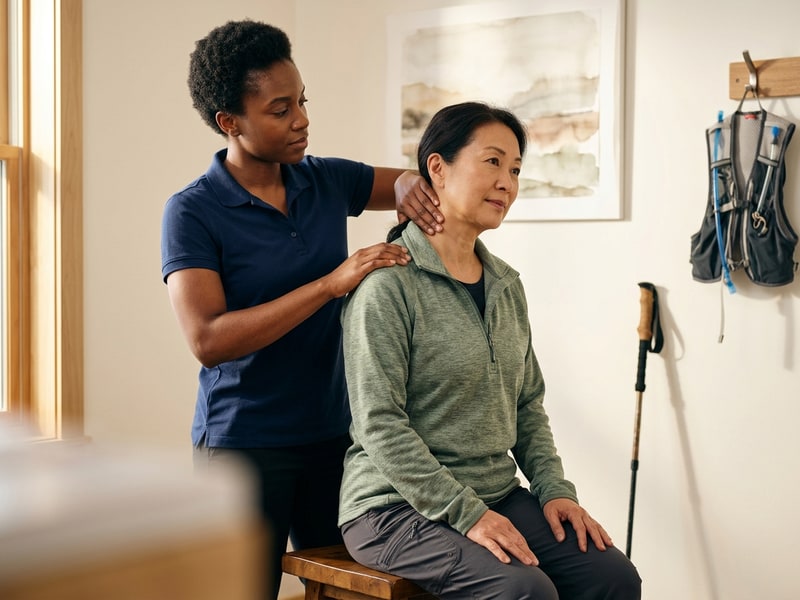
The Three Most Common Trail Injuries We Treat
Ankle sprains lead the list. The lateral ligaments on the outside of the ankle get overstretched when your foot rolls inward on uneven ground. The CDC lists ankle sprains as one of the most common musculoskeletal injuries in the United States. After the swelling settles, the joint often stays stiff and the small bones of the foot lose normal motion. That is where extremity care helps. Gentle mobilization restores glide between the talus, calcaneus, and midfoot bones, and specific balance work rebuilds the reflexes that keep you upright on rocky ground.
Knee strain is second. Long descents load the quads and patellar tendon, and a tight IT band can pull the kneecap out of its groove. Hikers often blame the knee itself, but the driver is usually the hip. Weak glutes let the femur rotate inward, which stresses the knee. We look at the whole chain, not just the sore spot.
Lower back tightness rounds out the top three. A heavy pack changes your center of gravity and forces the low back muscles to work overtime. If you already sit for a long commute, those muscles start the hike fatigued. Some hikers develop true sciatica with pain shooting down the leg. Others just wake up stiff. A 2018 review in the Journal of the American Medical Association found that spinal manipulation is associated with modest improvements in acute low back pain and function compared with usual care.
We also treat blistered heels, hip flexor strains, plantar fasciitis flares, and occasionally shoulder issues from trekking poles or a poorly fitted pack. If you are dealing with foot pain specifically, our post on plantar fasciitis and extremity care is a good starting point.
What a First Visit Looks Like After a Trail Injury
Show up in comfortable clothes and expect a real conversation. I want to hear what trail you were on, what the terrain was like, when the pain started, what makes it better or worse, and whether you heard a pop or felt anything shift. That story usually gets us 70 percent of the way to a working diagnosis.
The exam covers range of motion, orthopedic tests specific to the joint that hurts, neurologic screening if there is any numbness or weakness, and palpation of the surrounding muscles and joints. For an ankle, I check ligament stability and the small bones of the foot. For a knee, I test the meniscus, the cruciate ligaments, and the collateral ligaments, and I look at hip strength and foot mechanics. For a back, I screen for disc involvement, sacroiliac joint dysfunction, and muscle strain.
If something looks like it needs an X-ray or MRI, I say so and coordinate with your primary care doctor. Red flags like inability to bear weight, obvious deformity, significant swelling that will not go down, or progressive neurologic loss get referred out. Our page on chiropractic emergencies and when to seek urgent care walks through those signs.
Assuming conservative care is appropriate, treatment on the first visit often includes soft tissue work, joint mobilization or adjustment where indicated, and simple home instructions. I will show you two or three exercises, not twenty. You will get guidance on ice versus heat, whether to keep hiking on it, and what to watch for. The American Chiropractic Association emphasizes that chiropractors are trained to evaluate and treat musculoskeletal injuries and to refer when care needs to escalate.
Curious what to expect in more detail? Read what happens on your first chiropractic visit.
Recovery Timelines and What the Research Says
Every injury heals on its own clock, but general timelines help you set expectations. A mild ankle sprain (Grade 1) usually settles in two to three weeks with appropriate care. A moderate sprain (Grade 2) with partial ligament tearing can take four to eight weeks. Severe sprains need longer and sometimes need an orthopedic opinion. Knee strains and low back muscle strains often improve within two to six weeks of conservative care, though a small percentage become chronic if ignored.
A 2017 systematic review in JAMA by Paige and colleagues looked at spinal manipulative therapy for acute low back pain across 26 randomized trials. The authors reported modest short-term improvements in pain and function compared with other treatments. The result is an association from pooled trial data, not proof for any one patient, and the studies varied in size, control groups, and follow-up. Still, it supports what we see in the office: most acute low back pain from a weekend hike responds well to a few weeks of hands-on care and progressive loading.
For ankle sprains, research summarized by the National Center for Biotechnology Information supports early controlled motion and progressive loading rather than long immobilization. Manual therapy for the ankle and foot has been associated with faster return to activity in several trials, though sample sizes are often small.
What this means for you: do not stop moving. Rest the first day or two if things are acute, then start gentle motion. Ice for swelling in the first 48 hours, then transition to heat and movement. Hydrate seriously in Central Valley summer heat. Sleep matters more than most hikers realize, because tissue repair happens overnight.
We usually recommend a re-check at two weeks. If you are not making steady progress, we adjust the plan or refer out. Our recovery timelines FAQ has more detail on typical care schedules.
Preventing the Next Injury: A Manteca Hiker’s Pre-Trail Checklist
The best injury is the one that never happens. A few habits keep our Manteca hikers on the trail instead of in the treatment room.
Build a base before big hikes. If you plan a summer trip to Half Dome or a 12 mile day in the Sierra, do not make it your first hike of the year. Work up over four to six weeks with progressively longer walks, ideally with the pack you plan to carry. Central Valley hikers who train on flat ground and then hit steep grades in Yosemite often blow up their knees on the descent.
Strengthen the hips and core. Glute bridges, side planks, single leg squats, and step-ups are simple and effective. Strong hips protect the knees and low back. If your desk job keeps you seated, our post on posture fixes for remote workers is worth a read.
Fit your pack. A heavy pack riding low on the lumbar spine causes trouble. Most of the weight should sit on the hips through a properly adjusted hip belt, with shoulder straps snug but not carrying the load. Use trekking poles on descents to offload the knees.
Mind the shoes. Trail runners work for well groomed paths. Boots with ankle support help on rocky terrain and heavy loads. Replace shoes before the tread wears smooth.
Hydrate and fuel. Central Valley heat is no joke. Aim for consistent water intake and add electrolytes on hot days. Eat before you feel hungry.
Get a tune-up. If you have nagging tightness, do not wait until it becomes an injury. Regular preventative care keeps small issues small. For hikers with a history of back trouble, a check-in a week or two before a big trip pays off. If you are training for something specific, our sports injury service page covers how we structure prep and recovery care.
When to Call Us and What Care Looks Like Locally
Call within a day or two if you have swelling that is not improving, pain that keeps you from sleeping, a joint that feels unstable, or numbness and tingling. Sooner is better than later. Small problems handled early rarely become chronic, while ignored injuries have a way of turning into six month sagas.
We see hikers at our Manteca location as well as our offices in Ripon, Tracy, and Mountain House. If you live on the east side of Manteca near Woodward Park, the Ripon office is often the shortest drive. Tracy patients heading home from Bay Area jobs sometimes stop by our Tracy office before dinner. Same day and next day appointments are usually available for acute injuries. Details on hours are on our scheduling FAQ.
A typical care plan for a trail injury runs two to six weeks of visits, tapering as you improve. We combine adjustments, soft tissue work, and rehab exercises. If massage therapy will help you recover faster, we can coordinate that under the same roof. For hikers with older injuries flaring up, or those over 65 who want a gentler approach, our senior chiropractic care guide explains how we adjust technique for different bodies.
A few words on cost. Fees depend on the visit type and your insurance plan, so I will not quote a number in a blog post. Our front desk can verify your benefits and give you a clear picture before you commit. Our general insurance FAQ covers common questions.
Hiking is one of the best things you can do for your body and your head. A rolled ankle or a sore back should not end your summer. Get it looked at, get a plan, and get back out there. The trails around Manteca are too good to miss.