
Sports Injuries
Back-to-School Sports Readiness: A Sports Injury Chiropractor in Tracy Weighs In
By Dr. Tim Coykendall, D.C. · June 1, 2026 · Updated June 1, 2026
If your teen is heading back to fall practices at Tracy High, West, Kimball, or Millennium, a sports injury chiropractor in Tracy can help them start the season stronger and stay on the field. We screen for movement problems before they turn into injuries, treat the strains and sprains that do happen, and work alongside athletic trainers and pediatricians. Chiropractic care is a drug-free way to support a young athlete’s body through a demanding season.
Why Fall Sports Hit Tracy Teens Hard
August in Tracy means two-a-days in 95 degree heat, turf practices at Wayne Schneider Park, and long bus rides to away games across the Central Valley. After a summer of less structured activity, most high school athletes jump back into full practice volume in about a week. That sudden spike in training load is one of the biggest drivers of youth sports injuries.
The CDC reports that high school athletes account for an estimated 2 million injuries each year in the United States, with overuse and acute musculoskeletal injuries leading the list. Football, soccer, volleyball, and cross country, the big four at Tracy Unified schools, each carry their own injury patterns. Football players see more shoulder and knee issues. Cross country runners deal with shin splints, hip pain, and low back tightness from high mileage on hard surfaces. Volleyball athletes get shoulder and wrist complaints from repeated overhead motion.
I also see a steady stream of teens who sit in class all day, then ask their bodies to sprint, cut, and jump for two hours after school. That mismatch between sitting posture and athletic demand sets up tight hips, stiff mid backs, and weak core control. A good preventative care plan during the first month of the season can lower that risk before small issues snowball into missed games.
What a Back to School Sports Physical Should Include
California requires a sports physical before your child can practice or compete. The standard pediatrician visit checks heart, lungs, vision, and medical history, which is important and not something we replace. But the typical 15 minute physical rarely includes a detailed look at how your athlete actually moves.
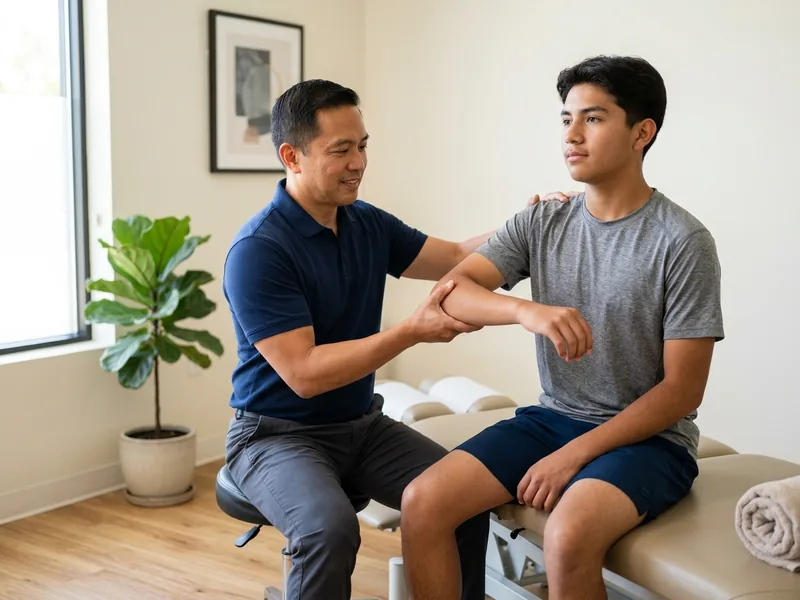
A chiropractic readiness exam adds the musculoskeletal piece. When a young athlete comes into our Tracy office, I look at:
- Spinal alignment and posture, especially in the mid back and lower back
- Hip and shoulder range of motion
- Single leg balance and squat mechanics
- Old injuries that never fully healed, like an ankle sprain from last season
- Asymmetries between the right and left side
The American Academy of Pediatrics and other sports medicine groups recommend a functional movement screen as part of the preparticipation process, because asymmetries and limited range of motion are linked to higher injury rates. We document what we find, share it with parents in plain language, and decide together whether the athlete needs a few adjustments, soft tissue work, or a home exercise plan before the season starts. If something looks medically concerning, we refer back to the pediatrician.
Common High School Sports Injuries We Treat
Most of the high school sports injury cases I see at Valley Chiropractic fall into a few buckets. Knowing the patterns helps parents catch problems early.
Low back strain. Football linemen, wrestlers, and rowers load the spine hard. Repeated extension and rotation can irritate the joints of the low back. Conservative care including spinal manipulation has solid support in the research for nonspecific low back pain in adolescents and adults.
Neck and upper back tightness. Soccer headers, volleyball serves, and wrestling all stress the cervical spine. Persistent stiffness or headaches after practice deserve a look. Our head and neck page covers this in more detail.
Shoulder pain. Pitchers, swimmers, and volleyball hitters often develop impingement type pain from repetitive overhead motion. We address the shoulder blade, mid back, and rotator cuff together rather than just the sore spot.
Hip and groin issues. Cutting sports like soccer and basketball produce a lot of these. Tight hip flexors from sitting all day make it worse.
Ankle and wrist sprains. These often get taped and rushed back. Without proper rehab, the joint stays unstable and reinjures. Our extremity care approach focuses on restoring full motion and strength, not just calming the pain.
How Chiropractic Fits Into Sports Injury Recovery
When an injury does happen, parents often ask whether their teen should rest, push through, or get treatment. The answer depends on the injury, but doing nothing usually is not the best plan. Tissue heals based on how you load it during recovery, not just on time off.
For a typical strain or sprain without a fracture or torn ligament, sports injury recovery usually includes a short period of relative rest, then progressive movement, manual therapy, and exercise. A 2018 systematic review in the journal Chiropractic and Manual Therapies by Corcoran and colleagues found that spinal manipulation combined with exercise produced better outcomes than exercise alone for several sports related musculoskeletal conditions.
In our office, youth athlete chiropractic care for an injury usually looks like this:
- An exam to rule out anything that needs imaging or an orthopedic referral
- Gentle adjustments to restore joint motion in the spine and the involved extremity
- Soft tissue work on the muscles around the injury
- A short home program of mobility and strength drills
- A return to play plan that coordinates with the athletic trainer or coach
You can read more about our general approach on the sports injury page, and about adjustments for younger athletes on our pediatric chiropractic page.
Building a Season Long Plan for Tracy Athletes
The athletes who stay healthy through November and into playoffs usually share a few habits. They sleep enough, they hydrate, and they take care of small aches before those aches become big ones. Parents can help by setting realistic schedules. A teen who has zero hour PE, varsity practice, club practice at night, and a weekend tournament is going to break down at some point.
We build season long plans for athletes at all four of our offices, including our main Tracy location. For most healthy high schoolers, that looks like a check in every two to four weeks during the season, with extra visits after games or tournaments if needed. The goal is not unlimited visits. The goal is keeping the athlete moving well so they can actually train.
We also coordinate with parents on simple home tools: foam rolling, a basic warm up routine, and sleep targets. The CDC recommends 8 to 10 hours of sleep per night for teens, and sleep deprivation is linked to higher injury rates in young athletes. If your child also deals with headaches after games or sciatica type leg pain from contact sports, those are issues we address as part of the same plan rather than separate visits.
When to Bring Your Athlete In
Some signs are worth a visit before the season ramps up or shortly after an incident:
- Pain that lasts more than a few days after practice
- A limp or visible change in how your teen moves
- Headaches that show up after contact or hard training
- Old injuries that flare up every season
- Numbness, tingling, or shooting pain into an arm or leg
For anything involving a head impact, loss of consciousness, or suspected fracture, go to urgent care or the emergency department first. We are happy to follow up after the acute phase. If your teen had a recent car accident on the way to or from school or practice, our auto accident injury page explains how that fits in, since insurance coverage and treatment timelines are different from a typical sports injury.
Sources
- CDC: Sports Injuries Among High School Athletes
- American Chiropractic Association: Sports Chiropractic
- Corcoran KL et al, Chiropractic and Manual Therapies, 2018, on manipulation for musculoskeletal conditions
- NIH NCCIH: Spinal Manipulation, What You Need to Know
- CDC: Sleep in Middle and High School Students