Pain Management
Herniated Disc Treatment Mountain House: Non-Surgical Options That Work
By Dr. Joseph Russell, D.C. · May 28, 2026 · Updated May 28, 2026
If you are searching for herniated disc treatment Mountain House residents can access close to home, the good news is that most disc injuries heal without surgery. Research shows that roughly 90% of patients improve with conservative care like chiropractic adjustments, physical therapy, and time. At Valley Chiropractic, I help commuters and families in Mountain House get back to normal life using non surgical methods that have solid evidence behind them.
What a Herniated Disc Actually Is
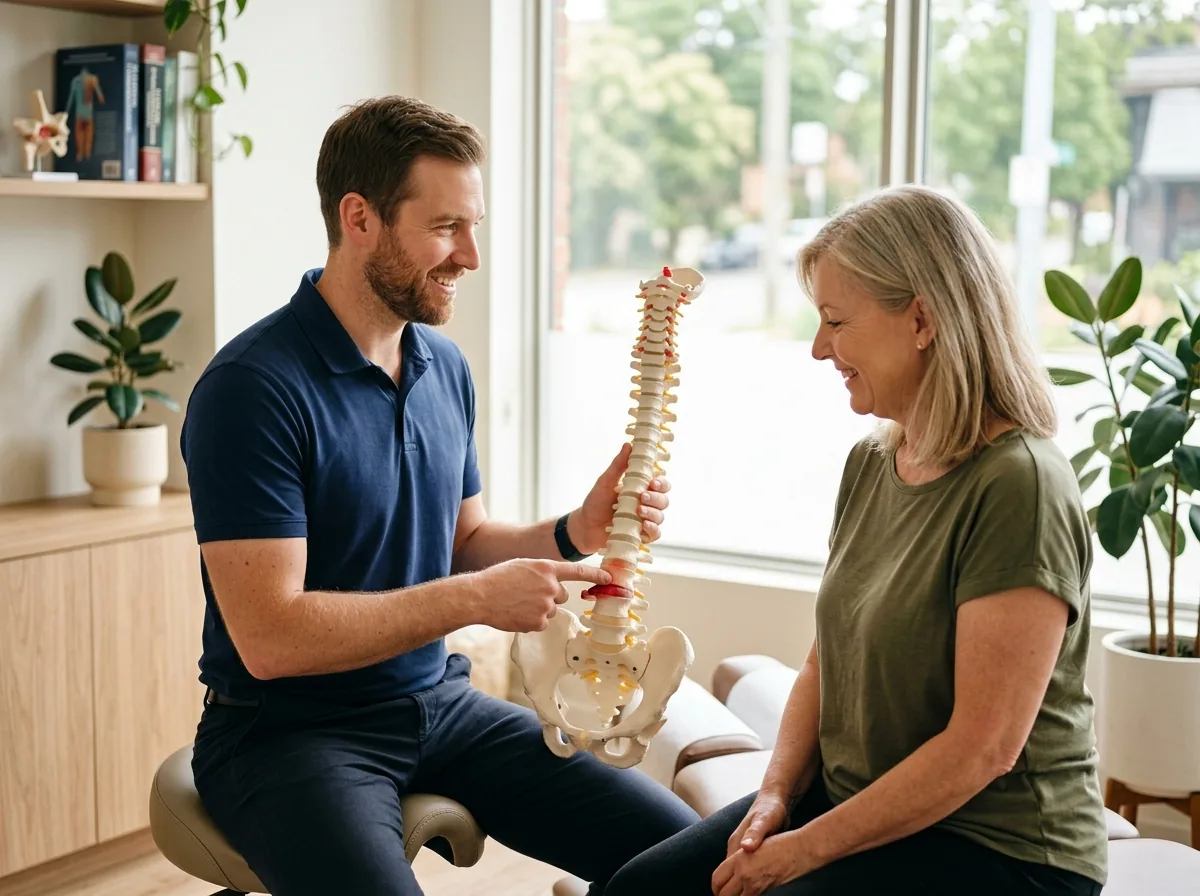
Your spine has soft cushions between each bone called discs. Each disc has a tough outer ring and a soft jelly-like center. A herniated disc happens when that jelly pushes through a tear in the outer ring. When it presses on a nearby nerve, that is when pain, numbness, or weakness starts.
Patients often ask me about herniated disc vs bulging disc. A bulging disc is when the outer ring weakens and pushes outward, but the jelly stays inside. A herniated disc means the inner material has actually leaked out. Both can hurt, but a true herniation tends to cause sharper nerve pain that travels down an arm or leg.
Common herniated disc symptoms include sharp low back pain, pain shooting down one leg (often called sciatica), numbness or tingling in the foot, weakness when lifting your toes, or neck pain that radiates into the arm. Many Mountain House patients I see describe the pain as worse when sitting, sneezing, or bending forward.
The location matters too. Most herniations happen in the lower back, but they can also occur in the neck. If you sit for long commutes on the 580 or spend hours at a desk in the Bay Area, the lumbar discs take the brunt of that pressure.
Why Mountain House Commuters Are at Higher Risk
Mountain House has grown fast, and most of my patients here are commuters. Many drive over an hour each way to Pleasanton, Livermore, San Ramon, or further into the Bay Area. That kind of sustained sitting puts real load on the lumbar discs.
When you sit, the pressure inside your lumbar discs is significantly higher than when you stand. Add in vibration from the road, a slouched posture, and a heavy bag tossed into the passenger seat, and the discs take a beating week after week. I wrote more about this in our post on lower back pain in Mountain House commuters.
Younger families in Mountain House also tend to lift and carry kids constantly. Picking up a toddler with a rounded back is one of the most common ways I see disc injuries flare up. Add a weekend of yard work in the Central Valley heat, and a small disc problem can turn into a full radiating leg pain by Monday morning.
The takeaway is not that you should stop commuting or stop lifting your kids. The point is that the daily mechanics of life in Mountain House create a real risk pattern. Catching disc symptoms early, before they become severe, makes non surgical herniated disc treatment far more effective.
Non Surgical Herniated Disc Treatment Options
The best evidence supports a stepped approach. According to the North American Spine Society and reviews published through the NIH, conservative care should be the first line for most lumbar disc herniations without progressive weakness or loss of bowel and bladder function.
Here is what non surgical herniated disc treatment usually looks like at our office:
- Chiropractic adjustments. Gentle, targeted chiropractic care can reduce mechanical stress on the affected segment and improve mobility around it. I do not crank on a herniated disc. The technique is specific and measured.
- Spinal decompression and flexion-distraction. These are slow, rhythmic techniques that create a small negative pressure inside the disc to help draw the herniated material back in. We use these regularly for disc conditions.
- Soft tissue work and massage therapy. Tight muscles around an irritated nerve make the pain worse. Releasing them helps.
- Specific exercises. McKenzie-style extension exercises, core stabilization, and nerve glides are research-backed for disc pain.
- Activity modification. Short walks, avoiding prolonged sitting, and changing how you lift.
Medications and steroid injections may have a role for short-term flare ups, but they do not fix the underlying mechanics. That is where hands-on care comes in. If you want a side by side look at this question, we covered it in pain medications vs chiropractic care.
Herniated Disc Recovery Time: What to Expect
Herniated disc recovery time depends on the size of the herniation, your overall health, how soon you start care, and how well you follow through with home exercises. Most patients see real improvement in 6 to 12 weeks. Studies from the journal Spine show that the herniated material itself often shrinks over time as the body reabsorbs it.
Here is a rough timeline I share with patients:
- Weeks 1 to 2: The goal is calming the nerve down. Pain may still be sharp, but we focus on positions of relief, gentle motion, and reducing inflammation.
- Weeks 3 to 6: Pain usually shifts from the leg back into the low back. This is actually a good sign called centralization. We add more active care.
- Weeks 6 to 12: Strength work, return to normal activities, and prevention. Most patients are back to work, exercise, and family life.
- Months 3 and beyond: Maintenance and preventative care to keep it from coming back.
Not every case follows this exact pattern. Some patients improve faster. A few take longer, especially if the disc is large or there is significant nerve compression. Red flags that need urgent medical attention include loss of bowel or bladder control, saddle numbness, or rapidly worsening leg weakness. Those situations may require a surgical consult.
When to Come In and What Your First Visit Looks Like
If you have had leg pain, numbness, or tingling for more than a few days, or if your back pain is keeping you from sleeping or working, it is time to get evaluated. Waiting often makes things worse, not better. Early intervention is consistently linked to better outcomes in the disc literature.
Your first visit at our Mountain House area office includes a full history, a neurological exam (reflexes, strength, sensation), orthopedic tests, and a movement assessment. If I suspect a significant herniation with nerve involvement, I will order an MRI or coordinate with your primary care doctor. Not every patient needs imaging, but when it is warranted, we get it.
From there, we build a plan together. I will tell you honestly if I think chiropractic is the right fit, if you need a co-management approach with a spine specialist, or if you need a surgical opinion. Most patients fall squarely in the conservative care group. If you have never been adjusted before, our post on what happens at your first chiropractic visit walks through the details.
We also work with most major insurance plans. If you have questions about coverage, the insurance FAQ is a good starting point.